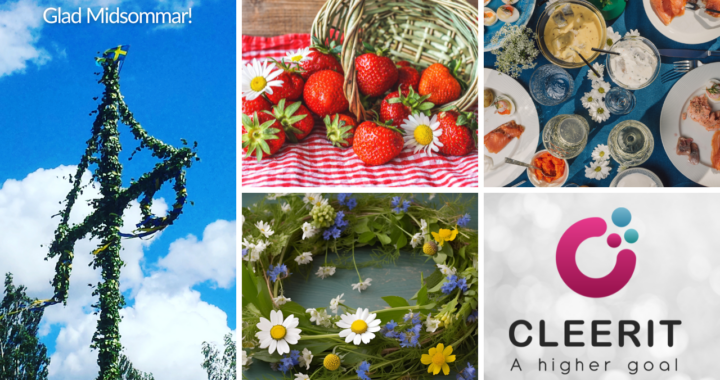
Today we celebrate “Midsommar” in Sweden, so “Glad Midsommar” to all Swedes around the world! 🌼
Midsummer, and alongside Christmas it is perhaps the most important holiday in Sweden. It is also surrounded by a certain mystique.
The original purpose of Midsummer Day as a church feast has all but disappeared. It was dedicated to John the Baptist, whose feast day falls on 24 June – the original date of Midsummer in Sweden.
🌸 What are we actually celebrating on Midsummer’s Eve?
Across Europe, Midsummer marks the transition from spring to summer – the time when crops were sown and people hoped for a good harvest. The celebration traces back to the feast of John the Baptist on 24 June and to the period when Sweden was still Catholic, before the 1500s.
The tradition reached Sweden from Germany, most likely in connection with the Christianisation of the country. But in Sweden, the religious meaning has long since faded.
🌸 Why is Midsummer such a popular tradition in Sweden?
One reason is that Midsummer coincides with the start of the summer holidays. For some, the day carries a national‑romantic glow or a nostalgic idea of something quintessentially Swedish.
Part of its appeal also lies in its association with the countryside. Many Swedes left rural areas during the 20th century but kept family ties and social networks there until quite recently. Today, many have summer houses instead.
And of course, our traditional festive foods are closely linked to Midsummer: herring, new potatoes, meatballs, and strawberries with cream.
🌸 How long have we celebrated Midsummer?
Midsummer existed in the agrarian society – roughly from the Middle Ages to the early 1900s – but we know relatively little about the earliest celebrations.
In early Christian times, the calendar was full of saints’ days, so John the Baptist’s day was probably just one among many and likely not celebrated in any special way. In the Protestant agrarian society after the early 1500s, Midsummer Eve’s night became primarily associated with magical powers.
The way we celebrate today is modern and dates from around the mid‑1800s. At that time, the middle class introduced festivities featuring dancing around a Midsummer pole shaped like a leafy cross.
Before that, the pole was usually just a decorated staff, sometimes with rings attached. Dancing may have occurred, but the evidence is uncertain.
The earliest documented references to Midsummer celebrations date from the 1500s, although the tradition probably arrived earlier, with Christianisation.
Midsummer reminds us how deeply traditions shape our sense of belonging – even as they evolve. Wherever you celebrate this weekend, we hope it brings light, connection, and a moment to pause in the middle of the year.
Source: Midsommar | Lär dig mer om högtider | Nordiska museet