“Glad Midsommar” to all Swedes around the world!

Today we celebrate “Midsommar” in Sweden, so “Glad Midsommar” to all Swedes around the world! 🌼

Midsummer, and alongside Christmas it is perhaps the most important holiday in Sweden. It is also surrounded by a certain mystique.

The original purpose of Midsummer Day as a church feast has all but disappeared. It was dedicated to John the Baptist, whose feast day falls on 24 June – the original date of Midsummer in Sweden.

🌸 What are we actually celebrating on Midsummer’s Eve?

Across Europe, Midsummer marks the transition from spring to summer – the time when crops were sown and people hoped for a good harvest. The celebration traces back to the feast of John the Baptist on 24 June and to the period when Sweden was still Catholic, before the 1500s.

The tradition reached Sweden from Germany, most likely in connection with the Christianisation of the country. But in Sweden, the religious meaning has long since faded.

🌸 Why is Midsummer such a popular tradition in Sweden?

One reason is that Midsummer coincides with the start of the summer holidays. For some, the day carries a national‑romantic glow or a nostalgic idea of something quintessentially Swedish.

Part of its appeal also lies in its association with the countryside. Many Swedes left rural areas during the 20th century but kept family ties and social networks there until quite recently. Today, many have summer houses instead.

And of course, our traditional festive foods are closely linked to Midsummer: herring, new potatoes, meatballs, and strawberries with cream.

🌸 How long have we celebrated Midsummer?

Midsummer existed in the agrarian society – roughly from the Middle Ages to the early 1900s – but we know relatively little about the earliest celebrations.

In early Christian times, the calendar was full of saints’ days, so John the Baptist’s day was probably just one among many and likely not celebrated in any special way. In the Protestant agrarian society after the early 1500s, Midsummer Eve’s night became primarily associated with magical powers.

The way we celebrate today is modern and dates from around the mid‑1800s. At that time, the middle class introduced festivities featuring dancing around a Midsummer pole shaped like a leafy cross.

Before that, the pole was usually just a decorated staff, sometimes with rings attached. Dancing may have occurred, but the evidence is uncertain.

The earliest documented references to Midsummer celebrations date from the 1500s, although the tradition probably arrived earlier, with Christianisation.

Midsummer reminds us how deeply traditions shape our sense of belonging – even as they evolve. Wherever you celebrate this weekend, we hope it brings light, connection, and a moment to pause in the middle of the year.


Source: Midsommar | Lär dig mer om högtider | Nordiska museet

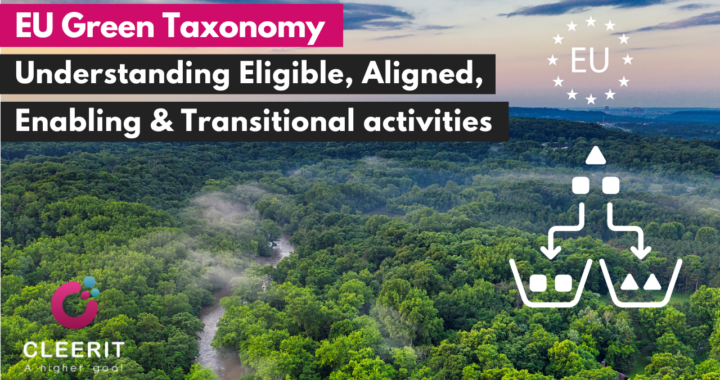
Understanding Eligible, Aligned, Enabling & Transitional economic activities under the EU Green Taxonomy

One of the most common sources of confusion in Article 8 reporting is the distinction between eligible, aligned, enabling, and transitional KPIs (i.e., Turnover, CapEx and OpEx).

Here is a breakdown:

â­• Eligible activity – is “in scope”

Turnover (or CapEx or OpEx) is eligible when it comes from an economic activity listed in the EU Taxonomy (i.e., it appears in the Climate Delegated Act or Environmental Delegated Act), regardless of whether the company meets the technical screening criteria.

➡️ Eligibility = in scope, not green. It is the first filter in Article 8: companies must disclose the share of turnover, CapEx, OpEx associated with Taxonomy‑eligible activities before assessing alignment.

â­• Aligned activity – is “fully compliant”

Turnover (or CapEx or OpEx) is aligned when the activity:

🌿 Substantially contributes to one EU environmental objective

🌿 Does no significant harm to the other environmental objectives

🌿 Complies with the technical screening criteria

🌿 Meets minimum safeguards (on an enterprise level)

➡️ Alignment = fully Taxonomy‑compliant. This is the KPI investors look at to understand how “green” a company truly is.

â­• Enabling activity – “makes others green”

Enabling activities generate turnover (or CapEx or OpEx) by helping other activities achieve substantial contribution (e.g., components for wind turbines, low‑carbon inputs). They are not green on their own, but they are essential to green outcomes.

➡️ Enabling activities are a subset of aligned activities – not an alternative.

Financial products must disclose enabling activities separately.

â­• Transitional activity – is “on the pathway”

Transitional activities apply where no low‑carbon alternative exists yet, but the activity is on a credible decarbonisation pathway. They must:

▪️ Have lower emissions than the sector average
▪️ Avoid lock‑in
▪️ Not hinder low‑carbon alternatives
▪️ Tighten criteria over time

➡️ Transitional = necessary interim activities on the path to net zero. Also disclosed separately in financial product reporting.

👉 How they fit together in Article 8 KPI reporting:

▪️ Eligible = activity appears in the Taxonomy

▪️ Aligned = meets all SC + DNSH + safeguards + TSC

▪️ Enabling = subset of aligned

▪️ Transitional = subset of aligned

Enabling and transitional activities do not replace alignment – they refine it.

🌿 A well‑structured, machine‑readable sustainability statement strengthens governance, accelerates internal learning, reveals strategic blind spots, and positions your organization for the EU’s dual green and digital transition.

👉 Contact us if you want to use our guided digital ESRS end-to-end templates to get a head start.

The EU is tightening the rules on green claims

The EU is tightening the rules on green claims as of September 2026 – and 20 Member States are already facing infringement procedures for failing to fully transpose the Empowering Consumers Directive (EU) 2024/825 in time.

For companies, this Directive is not “just another compliance exercise”. It fundamentally reshapes how sustainability is communicated to consumers – and it directly links to CSRD and ESRS reporting.

What changes?

The Directive bans misleading environmental and social claims, prohibits offset‑based “climate neutral” claims, regulates sustainability labels, and requires clear information on durability, reparability and software updates. It also targets early obsolescence and misleading digital practices.

Who is in scope?

All traders engaging in B2C practices: manufacturers, importers, retailers, marketplaces (for their own offers), digital service providers, and anyone acting on behalf of a business. SMEs included.

To comply:

  • Map and audit all environmental and social claims used in public documents and communication – remove generic claims (“eco‑friendly”, “green”, “biodegradable”) unless backed by recognised excellent environmental performance.
  • Eliminate offset‑based neutrality claims – “climate neutral”, “COâ‚‚ compensated”, “net zero” are banned unless based on actual lifecycle emissions.
  • Ensure future climate claims are credible and verifiable – requiring public commitments, measurable targets, a detailed implementation plan, independent verification, and published progress.
  • Review all sustainability labels – only labels based on credible certification schemes or public authorities remain allowed.
  • Provide durability and reparability information – including spare parts, repair restrictions, and minimum software update periods.
  • Update product design and marketing to avoid early obsolescence practices.

The Directive and CSRD/ESRS now form a single consistency framework:

👉 A company cannot say to consumers what it cannot prove in its ESRS disclosures.

This means marketing, product teams, sustainability, legal and finance must work from the same evidence base.

How CSRD/ESRS help you comply

The Directive’s requirements for credible climate claims map directly to ESRS:

  • Public climate-related commitments → ESRS E1 strategy & transition plan
  • Measurable, time‑bound targets → ESRS GDR-T
  • Implementation plan →ESRS E1 transition plan (actions, investments, milestones)
  • Independent verification → CSRD assurance
  • Published progress →ESRS GDR-M and GDR-A annual performance reporting

If you build robust ESRS disclosures, they automatically create the documentation needed to substantiate consumer‑facing claims – reducing legal risk and strengthening trust.

Key takeaway

This Directive is not only about avoiding greenwashing fines. It is an opportunity to align sustainability strategy, reporting, and consumer communication – and to use CSRD/ESRS as the backbone for credible, defensible climate and sustainability claims.


The EU’s Empowering Consumers Directive: What It Means for Companies — and How CSRD/ESRS Can Help You Comply

The EU is entering a new era of consumer protection. As of September 2026, companies operating in the EU/EEA will face a fundamentally different regulatory landscape for environmental claims, sustainability labels, durability information, and digital product practices. The Empowering Consumers for the Green Transition Directive (EU) 2024/825 is designed to ensure that consumers can make informed, sustainable choices — and that businesses communicate honestly and transparently.

The European Commission has already taken action: on 28 May, it opened infringement procedures against 20 Member States for failing to fully transpose the Directive. This is a clear signal that enforcement will be strict and that companies should not expect leniency.

This article explains the Directive, who is affected, what companies must do, and how CSRD/ESRS reporting can be leveraged to comply.

1. Why This Directive Was Introduced

The Directive amends two pillars of EU consumer law — the Unfair Commercial Practices Directive (UCPD) and the Consumer Rights Directive (CRD) — to make them fit for the green transition.

The rationale is straightforward:

Consumers cannot make sustainable choices if the information they receive is misleading, incomplete, or unverifiable.

The Directive therefore targets:

  • Greenwashing
  • Misleading environmental or social claims
  • Non‑credible sustainability labels
  • Early obsolescence
  • Hidden repair restrictions
  • Misleading software update practices

It aims to create a level playing field where genuinely sustainable products can compete fairly — and where consumers can trust what they are told.

2. Infringement Procedures: A Warning Signal

Member States had until 27 March 2026 to transpose the Directive. Twenty have not yet communicated full transposition. The Commission has therefore issued letters of formal notice, the first step in an infringement procedure.

If Member States fail to respond satisfactorily within two months, the Commission may issue a reasoned opinion — a formal, detailed statement explaining the breach and setting a compliance deadline. This is the final step before referral to the Court of Justice.

For companies, this matters because it shows the Commission’s determination to enforce the Directive — and because national transposition delays do not delay the obligations for businesses.

3. Who Is in Scope?

The Directive applies to all traders engaging in B2C commercial practices in the EU/EEA, including:

  • Manufacturers
  • Importers and distributors
  • Retailers (online and offline)
  • Marketplaces (for their own offers)
  • Providers of digital goods, digital content, and digital services
  • Repair and subscription service providers
  • Anyone acting on behalf of a business (agencies, franchisees, intermediaries)

SMEs are explicitly included.

4. What the Directive Changes 

A. Combatting Greenwashing and Misleading Claims

The Directive introduces strict rules to ensure that environmental and social claims are accurate, substantiated, and not misleading.

Ban on generic environmental claims

  • Terms like “eco‑friendly”, “green”, “biodegradable”, “climate friendly” are prohibited unless backed by recognised excellent environmental performance.

Ban on offset‑based climate claims

  • Claims such as “climate neutral”, “COâ‚‚ compensated”, “net zero” are banned unless based on actual lifecycle emissions, not offsets outside the value chain.

Ban on claims about an entire product or business when only part is sustainable

  • Example: “Made with recycled materials” when only the packaging is recycled.

Future climate claims must be credible

A trader must have:

  • Public commitments
  • Measurable, time‑bound targets
  • A detailed implementation plan
  • Independent third‑party verification
  • Published progress

B. Regulating Sustainability Labels

The Directive prohibits sustainability labels that:

  • Are not based on a certification scheme, or
  • Are not established by a public authority

Certification schemes must meet minimum standards of transparency, independence, and monitoring (e.g., ISO 17065).

This will significantly reduce the proliferation of private, non‑credible labels.

C. Addressing Early Obsolescence and Digital Practices

The Directive bans:

  • Features designed to limit durability
  • Software updates that degrade performance
  • Practices inducing premature replacement of consumables
  • Withholding information about negative impacts of updates

It requires transparency when third‑party consumables or spare parts impair — or do not impair — functionality.

D. Strengthening Pre‑Contractual Information

Companies must provide clear information on:

  • Durability
  • Reparability score (when available)
  • Spare parts availability and cost
  • Repair restrictions
  • Minimum software update periods
  • Commercial guarantees of durability >2 years (with a harmonised EU label)

A harmonised legal guarantee notice must also be displayed.

5. What Companies Must Do to Comply

Map and audit all environmental and social claims

  • Remove or substantiate generic claims.

Eliminate offset‑based neutrality claims

  • Rebuild climate messaging around actual emissions reductions.

Ensure future climate claims are credible

  • Update transition plans, set measurable targets, engage verifiers, and publish progress.

Review all sustainability labels

  • Remove labels that lack credible certification.

Provide durability and reparability information

  • Update packaging, product pages, and pre‑contractual disclosures.

Review product design and software practices

  • Avoid early obsolescence and misleading update practices.

Train marketing, product, and legal teams

  • Ensure consistent understanding of the new rules.

6. How CSRD/ESRS Help Companies Comply

The Directive and CSRD/ESRSreinforce each other:

  • The Directive protects consumers from greenwashing.
  • CSRD/ESRS protect investors and regulators from greenwashing.

Together they create a single consistency requirement:

A company cannot say to consumers what it cannot prove in its ESRS disclosures.

This is where CSRD becomes a strategic asset.

Robust ESRS disclosures provide the evidence base needed to substantiate consumer‑facing claims -reducing legal risk and strengthening trust.

This means:

  • Marketing claims must be aligned with ESRS data
  • Climate neutrality claims must reflect ESRS rules on offsets
  • Future‑oriented climate-related claims must match the ESRS transition plan
  • Any inconsistency becomes both a consumer‑law breach and a CSRD compliance risk

7. The Strategic Opportunity

This Directive is not only about avoiding greenwashing fines. It is an opportunity to:

  • Align sustainability strategy, reporting, and consumer communication
  • Strengthen credibility with consumers and regulators
  • Use CSRD/ESRS as the backbone for all climate‑ and sustainability‑related claims
  • Build trust through transparency and evidence

Companies that act early will be better positioned — legally, commercially, and reputationally — when enforcement begins in September 2026.


Sources:

Commission takes action to ensure complete and timely transposition of EU directives

Frequently asked questions related to Directive (EU) 2024/825 – Empowering consumers for the green transition through better protection against unfair practices and through better information

Sustainable consumption – European Commission

Directive – EU – 2024/825 – EN – EUR-Lex

7 Pillars Shaping the Next Generation of Sustainability Reporting in Europe

At the EFRAG 25th Anniversary Conference, Chiara Del Prete outlined what is becoming the new reference framework for high‑quality sustainability reporting in the EU. Europe is not simply implementing standards – it is building a coherent, future‑proof system designed to stand on equal footing with financial reporting.

🌿 1. Double Materiality as a Cornerstone

Europe’s model starts where others hesitate: recognising that impacts and financial risks & opportunities are inseparable. Double materiality ensures reporting reflects both a company’s footprint on the world and the world’s effects on the company – enabling realistic, holistic and forward‑looking analysis.

🌿 2. Robust Characteristics of Quality

Sustainability information must meet the same qualitative bar as financial reporting: relevance, fair representation, comparability, verifiability and understandability. This is the quiet revolution – sustainability reporting is no longer “extra‑financial” but co‑equal corporate reporting.

🌿 3. Holistic Coverage of Topics

Environmental, social and governance matters are treated as interacting dimensions, not separate chapters. This reflects how real‑world impacts and dependencies unfold – and how they translate into regulatory exposure, supply‑chain fragilities, reputational effects or shifts in market demand, while governance determines resilience.

🌿 4. Principle‑Based Approach

In line with the EU’s standard‑setting culture, ESRS remain principle‑based, enabling proportionality, judgement and sector‑specific relevance. The result is a system that is rigorous yet adaptable in a fast‑evolving landscape.

🌿 5. Structured Sustainability Statements

Sustainability reporting is now the “second leg” of standardised corporate reporting, structurally connected to financial statements. This strengthens connectivity, coherence and long‑term value understanding – anchoring sustainability firmly within the corporate reporting package.

🌿 6. Interoperability by Design

The EU framework is built to onboard other EU regulations and global frameworks (GRI, ISSB & others) through a single, coherent report. This reduces duplication, increases comparability and ensures a holistic view across reporting requirements.

🌿 7. Digital Readiness as a Prerequisite

With digital taxonomies and AI‑compatible structures, sustainability reporting enters the era of machine‑readable, assurance‑ready, decision‑useful data – the foundation for future supervision, analytics and capital‑market integration.

A European Reporting System Built for the Next Decade

These 7 pillars show how far the EU has come: from fragmented disclosures to a coherent, interoperable, digitally ready reporting system supporting Europe’s economic, environmental and social ambitions.

Sustainability reporting is no longer an add‑on – it is a strategic, structured and globally influential pillar of corporate reporting.


What happens when financial reporting, sustainability, geopolitics and technology converge?

EFRAG’s 25‑year milestone offered a rare moment to step back and see the full picture: a reporting system in transformation, a new governance logic, and a Europe determined to lead.

From the political battles of IFRS adoption to the emergence of a fully integrated sustainability reporting system, EFRAG’s 25th Anniversary Conference showed just how far Europe has come – and how much is still ahead.

Sustainability reporting is now strategic and central to capital markets. Sustainability impacts, risks and opportunities are business risks and opportunities. No company can afford blind spots.

I’ve summarised key messages that emerged across panels and keynotes – from connectivity to anticipated financial effects, AI, interoperability, digitalisation and the future of double materiality – and where corporate reporting is heading next. 👇

Enjoy the reading

Leila Hellgren

EFRAG at 25: Corporate Reporting Enters Its Next Era

The 2026 EFRAG Conference marked more than an anniversary. It captured a turning point in Europe’s corporate reporting journey – from the political battles of IFRS adoption to the emergence of a fully-fledged, interconnected system where financial and sustainability reporting stand side by side.

Across panels and keynotes, one message resonated: sustainability reporting is no longer an adjunct. It is reshaping corporate reporting, governance and capital markets – and Europe intends to lead.

From Accounting Debates to a European Reporting System

Speakers revisited the origins of EFRAG: a time when accounting was anything but technical. As Karel Van Hulle put it, “accounting is too important to be left to the accountants.”

The early 2000s were marked by divergent national views, resistance to IFRS, and the political realisation that only an EU regulation could ensure simultaneous adoption across Member States. The 2008 financial crisis then pushed accounting rules onto the front page of the Financial Times, revealing how standards can influence behaviour, market stability and public trust.

This history matters because it sets the stage for today’s transformation: sustainability reporting is now just as political, consequential and contested as financial reporting once was.

The Shift to Sustainability: A More Complex, More Political Landscape

Speakers acknowledged that sustainability reporting has become deeply intertwined with geopolitics, energy security and societal expectations. The ESRS revision – and the forthcoming Delegated Act – reflect this broader shift: not only a rethinking of the role of the economy in society, but also the recognition that corporate activity does not operate in isolation from an increasingly polarised world.

Supply‑chain disruptions, geopolitical tensions, social fragmentation and the energy transition all shape the risks companies face, and the expectations placed upon them. Sustainability reporting is therefore becoming a tool to navigate complexity, demonstrate resilience and maintain trust in a context where economic decisions are inseparable from political and societal dynamics.

Interoperability and the Global Landscape

In this contexte, Europe and the ISSB “have different north stars but look in the same direction.” The EU’s choice to remain independent – driven by its own political goals and double materiality approach – was widely seen as the right one.

Interoperability is the pragmatic solution: a way to reduce duplication, support global comparability and ensure that companies can access capital markets across jurisdictions.

Over 40 jurisdictions have adopted ISSB standards, each with their own policy objectives. Europe’s voice is heard – and increasingly influential – in this global dialogue.

Connectivity: Europe’s Distinctive Contribution to Corporate Reporting

A central theme of the conference was connectivity – the structured linkage between sustainability information and financial statements.

Speakers stressed that:

  • Sustainability goals influence financial decisions, provisions and performance.
  • Impacts drive risks and opportunities, which ultimately shape financial outcomes.
  • Financial reporting is the X‑ray; sustainability reporting is the MRI scan.
  • Together, they offer a full picture of a company’s resilience and long‑term value creation.

Connectivity is not consolidation. It is coherence: consistent boundaries, reconciliations, cross‑references and a shared narrative. As one preparer put it: “It is difficult to connect on paper what has not been connected in internal processes.”

This is why connectivity is ultimately a governance issue, not a reporting one.

Anticipated Financial Effects: The Next Frontier

Anticipated financial effects (AFE) remain one of the most challenging areas. Practices are immature, methodologies differ, and companies fear disclosing assumptions that may change.

Yet investors see AFE as “an analyst’s dream”: numbers build confidence, especially when accompanied by transparent methodologies and scenario‑based narratives.

The long phase‑in period until 2030 reflects this complexity – and the need for learning, capacity building and cross‑disciplinary collaboration.

Digitalisation and AI: Opportunity and Risk

Digitalisation was another recurring theme. Despite lobbying to remove XBRL, SĂ©bastien Harushimana (FCCA) stressed that research shows that AI complements structured data – it does not replace it.

AI can streamline reporting and enable real‑time analysis, but it also introduces risks:

  • Models are probabilistic and may produce different outputs: press the button again and you may have another outcome.
  • Sustainability data is less mature and less structured than financial data. AI systems perform best when the data they analyse is consistent, standardised, complete and historically rich. Financial reporting meets these conditions: decades of harmonised standards, clear definitions and structured formats. Sustainability data does not – yet.

Structured formats remain the backbone of reliable, machine‑readable reporting. And transparency about which AI models are used becomes essential.

Sustainability Risks and Opportunities are Business Risks and Opportunities

No company can afford blind spots. If you truly understand your business, you also know where the vulnerabilities lie – even if speaking about them feels uncomfortable at first.

And if a company chooses not to disclose, investors will construct their own view from external data sources. Reporting is where companies can tell their story on their own terms.

Why Companies Should Not Wait

A strong warning was issued to companies outside the CSRD scope: the wait‑and‑see approach is dangerous.

Not understanding your impacts, risks and opportunities is a governance failure. Value‑chain due diligence obligations will still apply. And investors will create their own assessments if companies do not disclose.

Early movers gain:

  • better internal management of impacts, risks and opportunities
  • clearer value‑creation logic
  • stronger investor trust
  • readiness for future regulatory or market expectations

As one speaker noted: “The topics on the CSO’s table will be on the CFO’s table within two to three years.”

The Future: A More Integrated, More Strategic Reporting System

Several themes emerged as defining the next decade:

  • Standardisation is replacing the “alphabet soup” of voluntary frameworks.
  • Double materiality will remain Europe’s distinctive contribution.
  • Performance, strategy, risk and resilience will shape sustainable business models.
  • Connectivity will reduce “cheap talk” and reward companies that tell a coherent story across financial and sustainability sections.
  • Technology will bring real‑time communication between companies and investors.

Above all, sustainability reporting is not a burden – it is a strategic tool for risk management and decision‑making.

A System Still Evolving – But Here to Stay

The conference closed with a clear message: sustainability reporting and connectivity are here to stay.

Europe must continue learning, adjusting and balancing ambition with operational feasibility. But the direction is set: a reporting system that is relevant, reliable, connected and forward‑looking.

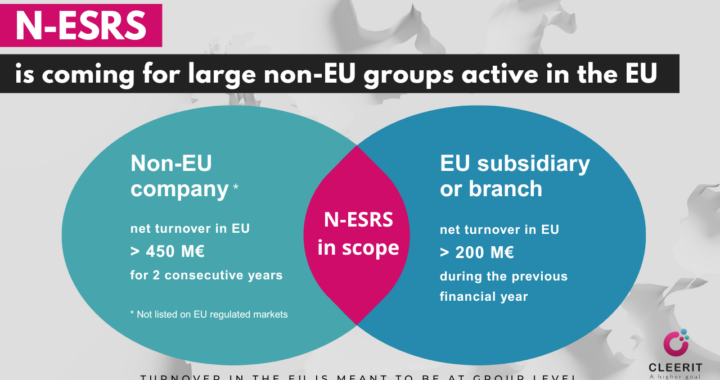
N-ESRS is coming for large non-EU groups active in the EU

ESRS for Non-EU Groups (N‑ESRS): What Your Group Needs to Know and Do

N‑ESRS is the EU’s new sustainability reporting standard that requires large non‑EU groups with significant EU turnover to disclose their impacts on people and the environment.

It will reshape sustainability reporting for large non‑EU groups active in the EU.

An estimated 1200 companies will be in the scope of N-ESRS:

  • 350-450 USA
  • 150-200 UK
  • 100-150 Switzerland, Japan
  • 20-50 Cayman Islands, China, Canada, Rep. of Korea
  • 10-20 Brazil, Mexico, Hong Kong, India, Bermuda, Virgin Islands

The objective of your N-ESRS sustainability report, taken as whole, will be to present fairly all your group’s material sustainability-related impacts, and how it manages them (through policies, actions, metrics and targets), reported at a global level.

N-ESRS is an impact-only reporting standard – the EU cannot impose full financial risk reporting on non-EU parents, and the legal mandate (Article 40a) is impact focused – but there are benefits to applying full ESRS on a voluntary basis:

  • If the non-EU ultimate parent company applies full ESRS, the CSRD in-scope subsidiaries of that non-EU company could benefit from subsidiary exemption. But only if the non-EU parent company applies full ESRS.

Timeline: What happens when

  • Mid‑July 2026: Exposure Draft published by EFRAG
  • Mid‑July – October 2026: Public consultation (100 days)
  • Early June 2026: Call for interest to participate field test
  • July – October 2026: Field tests with report preparers
  • January 2027: EFRAG delivers technical advice to the European Commission
  • Mid‑2027: N-ESRS adoption as delegated act
  • FY 2028: First reporting year
  • 2029: First N‑ESRS report published

Source : EFRAG SRB Online Meeting 3 June 2026, https://vimeo.com/event/5947235


  1. Who must report and when

Your group is in scope if it meets the both these two threshold criteria (Article 40a after Omnibus I):

  • Criteria 1: EU turnover > EUR 450 million for two consecutive years (at group level)

AND

  • Criteria 2: at least one EU subsidiary or branch with a net turnover in EU > EUR 200 million during the previous financial year

First reporting year: FY 2028, report published in 2029

  1. What you must report 

N‑ESRS is based on simplified ESRS, but focuses only on impacts, not financial materiality:

  • Disclosures on risks, opportunities, financial effects, resilience and dependencies are removed.
  • But financial information is per se strictly not excluded, it is needed to provide contextual information to understand impacts!

This is the core design choice: N‑ESRS = ESRS minus the financial‑materiality pillar.

Mandatory disclosure areas (Article 40a)

Strategy & business model

  • Plans to align with 1.5°C and climate neutrality by 2050
  • How stakeholder interests and sustainability impacts are considered
  • How sustainability strategy is implemented

Governance

  • Role, expertise and skills of administrative/management bodies in sustainability oversight
  • Incentive schemes linked to sustainability matters

Policies

  • Description of the group’s policies in relation to sustainability matters

Targets

  • Time‑bound sustainability targets, including at least GHG targets for 2030 and 2050
  • Progress toward targets
  • Whether environmental targets are based on scientific evidence

Due diligence

  • Description of due diligence process implemented by the group with regard to sustainability matters (aligned with EU requirements where applicable)

Impacts

  • Principal actual and potential adverse impacts across own operations and value chain, including products and services, business relationships and supply chain

Actions

  • Actions taken to identify and monitor those impacts, and other adverse impacts which your group is required to identify according to other EU requirements to conduct a due diligence process
  • Actions taken to prevent, mitigate, remediate or bring to an end actual or potential adverse impacts, and the results of such actions

Indicators

  • Metrics relevant to all disclosures above (governance, strategy, policies, actions, targets)

Topics covered

You must report across 12 standards (same structure as ESRS): Climate, pollution, water, biodiversity, circularity, own workforce, value‑chain workers, communities, consumers, business conduct, plus general requirements and disclosures.

  1. What perimeter to use (global vs EU‑related)

You will choose between three approaches (no final drafting yet):

Option 1 – Global approach (default)

  • Report global impacts for all topics.

Option 2 – Mixed approach (flexible by topic)

  • Climate impacts: always global
  • Other topics: option to report only EU‑related impacts, if:
    • Impacts are managed separately (e.g., EU segment, EU products)
    • EU‑related impacts include customer‑based and location‑based components

Option 3 – Full ESRS (voluntary)

  • If the non‑EU parent applies full ESRS, EU subsidiaries may benefit from the subsidiary exemption.
  1. Interoperability with IFRS S1/S2

The objective is to avoid double reporting:

  • Large overlap between ESRS 2 / IFRS S1 and ESRS E1 / IFRS S2 (governance, risk management, targets, GHG emissions, transition plan).
  • N‑ESRS adds impact‑focused requirements (e.g., compatibility with 1.5°C).

Incorporation by reference to the IFRS sustainability report is an option!


What your group should do now (practical preparation plan)

Confirm scope

  • Assess EU turnover at group level for the past two years.
  • Identify EU subsidiaries/branches with turnover > EUR 200M.

Decide your reporting perimeter

  • Global? Mixed? (topic‑by‑topic feasibility assessment) Full ESRS? (if aiming for subsidiary exemption)

Map your current disclosures

  • Start from existing sustainability reporting (TCFD, GRI, IFRS S1/S2, local laws…).
  • Identify gaps vs. N‑ESRS impact‑focused requirements.

Build or strengthen your due diligence system

  • Map and assess actual and potential impacts across entire value chain.
  • Document processes, policies, targets, actions and remediation results.

Prepare climate‑related disclosures

  • Transition plan aligned with 1.5°C
  • GHG inventory (Scopes 1–3)
  • 2030 and 2050 targets + progress tracking

Prepare governance & incentives disclosures

  • Roles, expertise, oversight mechanisms
  • Sustainability‑linked remuneration

Prepare for data collection

  • Global data for climate
  • EU‑related data for other topics (if mixed approach)
  • Value‑chain data (workers, communities, consumers)

Plan for interoperability

  • Decide what will be disclosed in the IFRS sustainability report
  • Decide what will be incorporated by reference into N‑ESRS

Engage early

  • Participate in EFRAG’s consultation and field tests
  • Align internal teams (finance, sustainability, legal, operations)


Why N‑ESRS focuses only on impacts (and not risks & opportunities)

  1. Article 40a of the CSRD requires transparency on impacts, not financial materiality

The policy objectives of Article 40a are: “Level‑playing field” and “Accountability and transparency of non‑EU companies on impacts”.

This is the legal anchor: The EU wants non‑EU companies to disclose their impacts on people and planet when they operate in the EU market. It is not intended as a full double‑materiality regime for foreign groups.

  1. The EU cannot impose financial‑risk reporting on non‑EU parent companies

  • ESRS for EU companies are not policy neutral, they support the EU Green Deal and transition agenda.
  • The EU can require disclosure of impacts caused by non-EU groups in the EU market.
  • But it cannot realistically require a non‑EU parent to disclose global financial risks, opportunities, or resilience assessments.

Thus, N‑ESRS focuses on what the EU can legitimately require from non-EU parent companies: impact transparency, not financial risk analysis.

Requiring non-EU groups to perform full double materiality at global level (including financial risks, opportunities, and resilience analysis) would be disproportionate and legally complex.

You may still mention financial data if it helps explain an impact, but you do not perform the ESRS financial‑materiality assessment.

  1. Interoperability with IFRS S1/S2 already covers risks for those who need it

  • IFRS S1/S2 = financial risks & opportunities
  • N‑ESRS = impacts only
  • Overlap exists for climate, but N‑ESRS adds impact‑specific requirements

This separation avoids double reporting and respects the different purposes of each framework.


Want to participate in EFRAG’s field test?

🌿 EFRAG has launched a call for interest to participate in the field test of the draft Non-EU ESRS (N-ESRS) ahead of its public consultation in July 2026. Register here before 1 July and secure direct interaction with EFRAG shaping the future sustainability reporting standard for non EU groups 👉 EFRAG Resumed Work on the European Sustainability Reporting Standard for Non-EU Groups and Launches Field Test Call for Interest | EFRAG


The best way to prepare for N-ESRS reporting? Guided digital ESRS end-to-end templates.

Contact us if you want to use our guided digital ESRS end-to-end templates to get a head start.