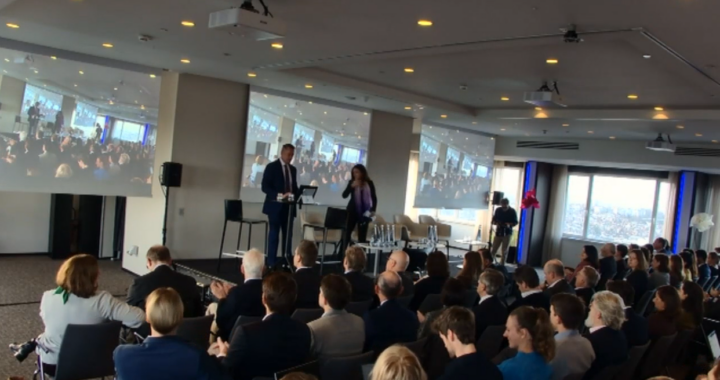
This morning (4/12) EFRAG unveiled the Draft Simplified ESRS: A European Milestone for Sustainability Reporting.
Our key takeaways:
The levers of simplification
- Simplification of the Double Materiality Assessment (DMA) (“when it’s obvious you don’t need to do more”)
- Better readability/ conciseness of the sustainability statement and better inclusion in corporate reporting as a whole
- The critical modification of the relationship between MDR’s and topical specifications (MDR’s have been renamed GDR’s and are cross-cutting) – if you have policies, actions and targets you need to follow the robust principle-based GDR requirements
- Improved understandability, clarity and accessibility of amended ESRS
- Burden relief reductions
- Enhanced interoperability
Additional reliefs have also been introduced
- Undue cost or effort exemptions
- Flexibility for acquisitions and disposals
- Allowances for lacking data
- Exemptions for immaterial activities
- Use of estimates in value chain data
- Exclusion of joint operations
- Protection of confidential information
- Transitional phase-in provisions
- Reduced disclosure on anticipated financial effects
The many reliefs come with an antidote: transparency. “We are trusting the market. The market will judge who is doing enough and who is not doing enough.”
Fair presentation
Fair presentation is a concept brought over from the financial reporting world to the sustainability reporting world.
It focuses on taking a step backwards and asking yourself what really matters, to balance the reporting.
You can hide material information in plain sight by providing too much granularity.
The difficulty is that fair presentation is interpreted differently in different countries, there is not yet a common understanding.
We will progress and find common grounds by learning from each other and by consulting with our stakeholders. And we will have increasing access to benchmarks.
Emphasis on the conciseness of the report
- Flexibility to enhance clear communication and coherence
- Avoid obscuring information
- Policies, Actions and Targets (PAT’s) reported only if the undertaking has them
- Option to include an executive summary (needs to meet the qualitative characteristics of information)
- Option to use appendices to present more detailed information (incl Art 8)
At the end of the day, ESRS is about telling the story in a standardized way.
Anticipated financial effects
It has been one of the most difficult topics.
“Climate change has been around for 20-30 years, we left this to the market for 20-30 years. Did we advance? The answer is no. We try to address difficult topics, but they are pressing.”
“We have a multi-stakeholder approach, we have preparers, and we also have investors and social representation.””
“Those who have their pension funds invested in companies are interested in understanding the possibility of facing stranded assets. So, on the one hand we have preparers saying that it is difficult and new, and a market that needs information.”
“We have 5 years to prepare, but we need to start now. Anticipated financial effects may materialize. If they are likely to materialize in the next 5 years, you better get started and estimate them now. If you want your company to be resilient, I would think twice about using the reliefs.”
“Gross vs net”
“This is the last time we hear ‘gross vs net’.”
What we heard from preparers is “I have implemented measures and now I have to pretend as if they don’t exist”. This does not always make sense.
- Either something is happening – and we need to mitigate the consequences.
- Or it can happen in the future – and we need to prevent it.
- Or it has happened – and we need to remediate.
The approach laid out in the draft simplified ESRS allows to take into account policies and actions for potential events to the extent they are effective. Decision usefulness is key, we need to be able to assess where the company is at.
Who decides which groups of stakeholders may trigger the reporting of policies and actions?
“Companies are connected to their stakeholders on a daily basis. We don’t want to underestimate the seriousness of companies, and knowledge of what they need to do.
And if you are not sure, reach out to stakeholders, experts and investors. Investors are very interested in how risks are managed. You need to show that you are in control.”
It’s about understanding your business but also about understanding your many stakeholders.
Balancing simplification with supporting EU policy goals
“Many are still unhappy: some think we reduced too much, others think that we did not reduce enough.”
There is a tension that we have to recognize: how do we reduce the burden while still keeping the EU policy-alignment?
It’s challenging, much like fitting a square in a circle. But we believe that we have reached a balance by focusing on what is material, in a simpler and more to the point manner. The standards have been simplified, but they do still address all the fundamental goals.
In some cases, we adapted the framework to the reality: not everybody knows where their waste goes, for example, so we can now report “destination unknown”.
Climate-related scenario analysis is not mandatory as such, but if it is performed it will trigger increased resilience.
Another example: SMEs are the engine of many of the EU economies, and CSRD mandates us to protect SMEs from late payments. But the data collection seems to be burdensome.
So, the application requirement now is that “if late payment to SMEs is a material topic for the undertaking, paragraph 11 of ESRS 1 General Requirements applies; therefore, the undertaking shall provide an entity-specific metric, if material.”
The sub-topics of the social standards often go hand in hand, so it made sense to group some of them.
Sustainability reporting, if taken strategically in the company, triggers strategic decisions, and that’s ultimately what we want to achieve.
It is important to focus on data that can move the needle.
The importance of intangible value and quality data
The gap between a firm’s financial book value and its market valuation is explained by significant intangible value. Sustainability reporting will be a game-changer.
A standardized data environment is far less costly than a fragmented data landscape.
Information is always better when it is prepared at the source, in this case by the business.
Standardized corporate reporting should stand on two legs, financial reporting and sustainability reporting, joined by the governance of the business.
If we subscribe to the policy objective of relevant quality data, we need to learn and take stock of what works and what does not work. We have been given the opportunity to perform a post-implementation review earlier than planned.
We are now expecting a virtual circle. It is possible if we calibrate the requirements in a multi-stakeholder environment. Proportionality and relevance will be key.
Technology is a tool to help us overcome the challenges.
If you believe in the benefit of sustainability information, it cannot be left a side. Time is of the essence.
Competitiveness is a medium- and long-term goal that requires addressing critical transition issues – for the future of our companies and society at large.
Reporting is ultimately a question of transparency and management decisions that pave the way for the future. It goes far beyond compliance, it is a strategic decision, whether mandatory or voluntary.
Coming up
- Given the importance of the IG3 guidance document, EFRAG needs to follow a robust process withing the data team to issue a draft for feedback, probably for Q1.
- Updated XBRL taxonomy in 2026.
- Interoperability mapping.
- A very important plea: “We need clarity on the implementation for summer 2026, the improvement is significant and we need time to prepare.”
ESRS knowledge hub
EFRAG has launched a knowledge hub, in English, with the objective is to help the market actors to learn and apply the standards, with all ESRS resources gathered in one place (datapoints, guidance, Q&A, XBRL taxonomy elements…, and other key materials supporting sustainability reporting).
It also includes the VSME resources.
It’s your interactive platform to master sustainability reporting, with the objective to transform complex regulatory frameworks into actionable insights — helping you stay ahead of developments and lead with confidence.
Accessing adopted and Draft standards as well as implementation guidance has been made intuitive with the depth of expert knowledge is delivered with the clarity of structured guidance.
You can access and register it here: https://knowledgehub.efrag.org
VSME
Will the VSME be changed in the future?
VSME has been developed and tested for companies with less than 250 employees.
It mainly supports bilateral reporting relationships: the official way to communicate information for companies with less than 250 employees.
The benefits of DMA, for example, are not included.
For companies that will no longer be in the scope of CSRD after the Omnibus negotiations, the intent is to do something as simple as VSME.
Whether there will be changes will be known when the Commission starts working on that.
Read more
The draft simplified European Sustainability Reporting Standards (ESRS) are available here: https://www.efrag.org/en/news-and-calendar/news/efrag-provides-its-technical-advice-on-draft-simplified-esrs-to-the-european-commission
Read more about the simplified ESRS here: EFRAG has published the draft simplified European Sustainability Reporting Standards (ESRS) – Cleerit ESG
#CSRD, #ESRS, #VSME, #EFRAG, #Governance, #SustainabilityReporting